Child Psychologist Answers Parenting Questions
Released on 09/08/2026
I'm Dr. Becky Kennedy.
I'm a clinical psychologist, author,
and the founder of Good Inside.
I'm here today to answer your questions from the internet.
This is Parenting Support.
[rhythmic percussive music]
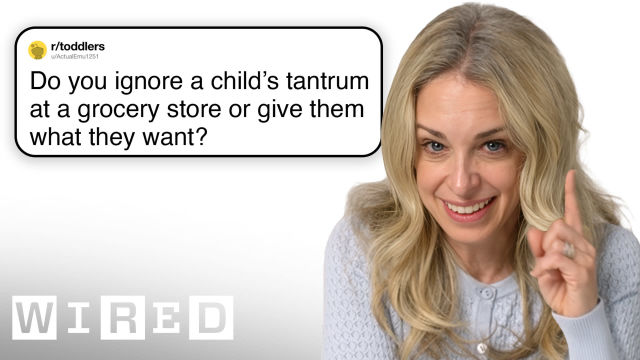
ActualEmu1251 is asking,
Do you ride out a tantrum at the grocery store
or give your toddler anything to make them stop?
I think the best way to think about this question
is what's going on when a kid
is having a tantrum at the grocery store,
and what will be helpful
in general for them in the long term?
And can I give myself permission 20% of the time
to just make the situation easier?
So, let me answer that first.
Yes, if it makes sense in the moment
because of your bandwidth,
because you just have to get yogurt
for the recipe you're making, to say,
You know what? Here's the candy bar.
Stop having a tantrum.
Yes, do that. No guilt.
I would do that myself.
The bigger question is, if I'm doing that every time,
then my kid gets into a cycle that I don't think I want,
and it's not gonna be good for them long term.
We think the cycle is,
Well, then my kid just thinks they can get away
with anything they want.
That's actually the least generous version
of the cycle and of your kid.
That's not what the bad cycle is.
The cycle actually is, for a kid,
I get overwhelmed by my feelings because I'm four.
Now I'm seeing that the feelings that overwhelm me
overwhelm my parent.
That's actually really scary.
That's like being scared of turbulence
and then the pilot coming on saying,
Ah, turbulence!
That is terrifying.
So the reason we wanna sometimes ride out the tantrum
or say, You know what?
I'm picking you up.
We're gonna leave the grocery store.
You're having a hard time,
is because you're actually
showing your kid something powerful,
The feelings that overwhelm you don't overwhelm me.
I am the sturdy pilot for you during your turbulence.
Which means you will now have a model
of how to do that for yourself going forward.
And I'm gonna pick my kid up to bring them into kind
of a smaller contained environment
for their kind of emotional fire to ride itself out.
That's very different than the energy of my job
is to calm them down, which ironically,
that energy is just gonna add more fuel to the fire
because all my focus is on making it stop.
Now, let's say the fire has kind of burned out,
which means my kid is calm.
In that moment exactly, it's still not a teaching moment.
Say something simple like,
Oh, it was hard to be in the grocery store,
or, We got through that together.
That's it.
The next day, I would hope you'd think,
Hm, if I don't change the conditions,
then I really shouldn't be surprised
the fire just happens again.
So what could I do differently next time?
Well, maybe I'm not gonna do my grocery store run
right after soccer practice when my kid's exhausted.
That's actually how you change [keyboard keys tapping]
the likelihood of a tantrum. [mouse button clicks]
This one is from Scry_me_a_river.
How on Earth do you raise a child
to become confident and not a pushover?
Let's start by thinking about what confidence is
'cause we can't ever develop a trait in a kid
or in ourselves if we don't actually understand
what that trait is really about.
We're told confidence is feeling good about yourself.
No, I think confidence is self-trust,
and that's a big difference
because if we're trying to build confidence
by helping a kid feel good about themselves,
we're always gonna try to build them up
and we're gonna try to take them out
of their uncomfortable emotions.
That actually leads to a fairly fragile kid.
There's lots of things we can do
to build confidence in our kid,
but I would start with two things on the daily.
Number one, believe your kid's emotions when they have them.
That's really important.
You can't bypass that step.
So, when your kid says,
Oh, I can't believe you're going out to dinner.
Want you to put me to sleep tonight,
we think our job is to take them out of the emotion.
No, believe that emotion.
Oh, you wish I was staying home.
You wish it was me and not Grandma.
That doesn't mean you shouldn't go out.
That just means you need to believe that they feel
the way that they're showing you they feel.
That is the foundation of confidence you can't miss.
The second thing you could do on that daily
is remind yourself confidence comes from learning
how to get through hard moments,
not from learning how to exit them as soon as possible.
Let's say you have a three-year-old who's whining,
I can't do the puzzle!
Do it for me!
Confidence doesn't come from your kid finishing the puzzle.
Confidence comes from your kid learning that they can get
through a time when they haven't yet finished the puzzle.
So instead of saying,
Here, put the piece in this spot,
you'd say, Oh, you're right.
This is really tricky.
I'll sit right by you.
And I'm not gonna do it for you
because I'm not gonna take away
the best feeling in the world,
which is watching yourself [keyboard keys tapping]
make progress on something you didn't think you should do.
Tracethebow is asking,
Two-year-old won't settle for bed,
and I'm truly at my wit's end.
Please help.
Sleep is separation.
I wanna say that again because it's mind-blowingly simple,
but also not obvious until you hear it.
Sleep is separation.
Think about a two-year-old being dropped off
for daycare for the first time.
They're separating from me.
Of course they're gonna have a hard time.
I have a little routine with them,
and I make sure they're settled with the teacher
and then I pick them up however many hours later.
Now, think about night.
I separate from my kid for longer, more hours.
There's no teacher.
There's no toys.
There's no other kids.
They're alone in their room in the dark.
That separation is actually much harder,
and things you take for granted,
kids don't take for granted.
You know you're gonna be there when your kid wakes up.
A two-year-old especially,
when they go in their room and you close the door,
for all they know, you travel to the Moon
and something could happen to you.
You can say this,
You know, sometimes, it's hard to go to sleep
because you might be wondering where Daddy is.
First of all, let me tell you.
When you go to sleep and I close the door,
do you wanna know what I do?
I walk out, I sit on the couch.
Actually take your kid,
Go here, then I go to my room and I go to sleep.
And then I wake up maybe before you,
I come to the kitchen, I get my coffee,
and then I am there when you walk out.
Every night, that's what happens.
That gives your kid a mental model.
Then you can teach them a mantra.
Do you know there's something you can say to yourself
when you're going to sleep that helps your body
feel a little calmer?
I'm gonna teach it to you.
Let's say your kid's name is Bella.
♪ Bella is safe ♪
♪ Daddy is near ♪
♪ My bed is cozy ♪
You can hear I'm saying it in a little bit
of a sing-songy way.
Anything with song tends to regulate the body.
And now that you're singing it,
your kid is eventually gonna be able
to say it to themselves,
but they're gonna hear your voice.
They're gonna hear your little sing-songiness,
so their mantra is, in some ways,
internalizing your supportive presence.
You can make this part of the routine.
You can say it when you go out of the room.
There's so many other things, [keyboard keys tapping]
but that is one of the ways to get started.
[mouse button clicks]
nomorelandfills is asking,
When did people get so neurotic about providing snacks
for their children every six seconds?
Was this a Gen X or millennial parent invention?
We tend to think in extremes.
There's a lot between hungry and starving.
I am not advocating for starving children
to get them to eat more, no.
But something's happened culturally
where we now try to bring kids' uncomfortable emotions
to a zero.
You're sad, here's happy.
You're frustrated, here's a solution.
You're left out, I'm throwing you your own party.
And I think this is what's happening with hunger,
where now, I have to bring snacks all the time.
God forbid my kid is hungry 45 minutes before a meal,
and all of a sudden, I'm solving for hunger
and bringing it to a zero.
There's a lot between a zero and 100.
Along these lines of snacks and food,
it's powerful to say to your kids,
You know what? We just had a great lunch.
We're gonna have dinner at this time.
Just so you know, when we're out for these hours,
I'm gonna bring one snack and by the time it's,
I'm making this up, four o'clock,
there's nothing available because it's actually important
to be a little hungry [keyboard keys tapping]
before dinner. [mouse button clicks]
FunnyYellowBird is asking,
How do I get out of the habit
of bribing my three-year-old?
A little bit of bribing here and there, it's fine, okay?
It's not harmful,
and there are certain moments if something small
gets your kid over the edge in a key moment.
That's okay.
What's problematic if I get into a dynamic with my kid
where bribing becomes the foundation,
and the reason that's problematic
is because what's actually happening is your relationship
is becoming transactional,
and that has really big implications as your kid gets older
'cause here's what I know no parent wants.
I say to my 14-year-old,
Hey, can you pick your towel off the floor?
And my son goes, What are you gonna give me?
That is cringe-worthy, right?
And we should not be surprised when our teenagers say that
if our predominant strategy for cooperation,
which really means getting our kid
to do something they don't wanna do, is bribery.
So, that's the framework.
So, how can we get out of a situation where bribery
is the primary mode or anything more than,
you know, five, 10% of cooperation or transition moments?
First of all, is the concept of connection capital.
Our relationship with our kid
in some ways is a series of moments
where we're depositing into the relationship
through being there, through listening,
through giving them our full attention,
putting the phone over here,
showing up, having fun, playing.
Every time you ask someone in a relationship
to do something you want them to do
and they don't wanna do,
you're kind of having a withdrawal on the relationship.
Now, to be clear, as parents,
we withdraw a lot, and we have to.
Our kids have to get dressed.
They have to come to breakfast.
They have to put on their shoes. They have to go to bed.
They have to do a million things they don't wanna do,
but here's the secret, though.
If we withdraw a lot from the relationship,
we better be depositing in because if we don't deposit in
through all the ways we connect to our kid,
the only thing we're gonna have is bribery.
The first time you see your kid,
when they come home from school
and the last minutes before they go to bed
are big connection capital opportunities.
And then when the moment comes,
when we have to go through a transition,
which is what most cooperation moments are about,
how can we be a little bit more on the same team
so the bridge [keyboard keys tapping]
kind of doesn't feel so big?
[mouse button clicks]
pb_and_s is asking,
Gentle parenting turned my child into an A-hole.
At Good Inside, we don't call it gentle parenting,
and that's because the word gentle,
it just doesn't resonate with me in terms of how I need
to access something in myself in the hardest moments.
Good Inside is sturdy parenting.
There's something about someone who's sturdy,
like the pilot and turbulence where you can locate them.
You think, Okay, you're connected to me,
but you're staying connected to yourself.
You understand the limitations of my reactions.
You're gonna maybe listen to me,
but you're not gonna be taken over by me.
I think many parents who tell me that gentle parenting
has made their kid an A-hole,
what they're actually saying is,
I've done the part of parenting, that's important,
of believing my kid's feelings,
but I've over-corrected.
I've now gone from caring about
and believing my kids' feelings
to letting my kids' feelings dictate my parental decisions.
That's a cultural kind of overcorrection
we've had over the generations.
We've gone from nobody cares about kids' feelings
to kids' feelings now dictate parent decisions.
Both extremes kind of produce A-holes,
so we wanna produce better,
regulated, more resilient, more capable kids,
so if this is the situation you're in,
my guess is you've forgotten about boundaries,
which don't come from exerting your power.
A boundary is something you tell your kid you will do
and it requires your kid to do nothing.
So, when we say to our kid,
Stop jumping on the couch, Timmy,
those are not boundaries.
That's a request.
A boundary would be this.
Hey, Timmy, you're jumping on the couch
so close to our glass table.
Not safe.
It looks like it's hard for you to get off,
so here's what I'm gonna do.
I'm gonna walk over to you, and if by the time I'm there,
you're not off the couch,
I'll pick you up and I'll put you on the floor
and you can go jump on the carpet.
That is a boundary. [palm thumping]
Timmy's not gonna say, Thank you.
No, Timmy will have a tantrum.
Timmy will protest, especially if Timmy's not used to this.
That's actually a healthy sign.
You want your kid to have an emotional reaction
'cause that's what's gonna actually propel them
to take the next step.
And when they get upset about your boundary,
you can do the second part of your job
that we say is part of family jobs at Good Inside.
You validate their feelings, [keyboard keys tapping]
but you do it while continuing
to hold the boundary. [mouse button clicks]
From kenzycolombini, Why are little kids
so obsessed with iPads?
Seriously, go read a book or play in some dirt.
I think there's a broader question here,
why are we so obsessed with our little screens, right?
And I think about myself,
I should go read a book.
I should go play in some dirt.
We all should.
Our screens are designed for low-effort,
high-gratification patterns.
How do I realistically, as a practical, real human parent
[chuckles] in 2026, manage this kind of duality?
How easy it is to just give my kid an iPad
so they're satisfied in the moment,
so I can do things in the moment.
That is easy.
That is so real.
And how do I balance that with all the things
that they could be doing today
that will come with whining and meltdowns and struggle,
but that are actually gonna make their life
and my life easier going forward, but harder today?
We're really talking about the balance
of short-term gratification
and long-term resilience and health.
I don't wanna pretend I have a perfect answer to this,
and in every family, it's different.
I am not rigid about this.
I didn't have some totally screen-free existence.
It just didn't make sense for our family.
And sometimes, I think struggling with it
and just carving out times and even saying to your kid,
Screens are away for this period of time.
And when they're away, they have to be visibly away.
This is part of building a circuit that involves effort
and risk-taking and vulnerability
and learning how to generate ideas on your own,
and that is harder,
but if you think about it in chunks,
that balance might be more possible.
[mouse button clicks]
cheeseburghers asks, How do you correct
a three-year-old without screaming?
I'm gonna make up that the three-year-old's hitting, right?
Maybe if it's not, you can fill in the blank
with something else that you'd want to correct.
What is my job when my kid is hitting?
And if you're hearing me ask that and you're like,
I have no idea, that's okay.
I think parenting is the only job in the world
that we're expected to do well without any training, right?
So it's important to get support and education,
but that's a question I promise you I can answer.
When a three-year-old is out of control,
hitting, screaming, we have two jobs.
Number one, stop the out-of-control behavior,
and that's the job we're often too slow to do.
Here comes a playdate and I'm, like, talking to another mom
and then Arn starts hitting.
This is where, actually, we begin to have the wrong cycle.
Why am I talking to a friend when I know
my son has a hitting problem?
Like, I'm setting him up for failure,
I'm setting myself up for frustration,
and I'm setting myself up to scream at him.
That's just an unfair setup for everyone, including you.
So, first, my job is to get ahead of the behavior.
As soon as his friend takes his favorite toy,
he starts to hit, like it's kind of clockwork.
Oh, that means when Arn's on playdates, not forever,
probably only for, like, a couple weeks,
I'm gonna sit next to him and I'm gonna say,
Sweetie, when you have your friend over,
I know it's hard to share some of these toys.
I'm gonna sit close to you.
And if it seems like things are ooh,
that's what I'd say to a three-year-old,
I'm gonna hold you, bring you to the side.
We're gonna take a deep breath,
and then go back to playing
because my number one job is to keep you safe,
and hitting isn't safe.
Now, I'm gonna sit there and I'm gonna start
to notice Arn gets this look in his eyes.
You see it and you're like,
Oh, there's that look.
I'm gonna intervene then,
not because I don't believe in my kid,
because I do believe in my kid
and I don't wanna let my kid become a bad kid.
It's the worst feeling for a kid.
I'm like, I've been hitting kids for six months
and my mom's just kinda letting me do it again.
Is there no adult here who's gonna help me?
So intervene earlier.
By the time I'm screaming, to some degree,
a pattern has already played out.
We wanna try to get ahead of the pattern.
Then I think there's a second part of this question,
what do I do when I scream with my kid?
What do I do next?
We repair.
I believe we're experts in imperfect parenting.
Repair is the most important strategy.
Oh, sorry, I yelled.
You know what? It's been hard to play next
to your friends with certain toys.
I'm gonna get closer to you next time
and try to help before the hard moment comes.
And then I do that the next time.
You're a parent who's doing what the rest of us are doing.
You're learning along the way,
you're trying to show up in a way you're proud of next time,
and you know you always have repair
when something goes awry. [keyboard keys tapping]
[mouse button clicks]
This is from Strict_Print_4032,
How to find the line between picking battles
and setting boundaries?
I think it comes back to understanding what boundaries are
and what boundaries are for.
Boundaries are generally to keep our kids safe
and to prioritize our kids' long-term interests.
It's not technically dangerous for my kid
to stay up three hours too late
every night in the short term,
but that's not great for their development long-term.
But that's why we set limits, right?
Or sometimes we also just set limits
around important family values we have.
I'll take an example.
One of my family values
is not how my kid dresses to school every day.
It's not. That's just not high on my value list.
Now, I want my kid to have appropriate clothing
for a setting, appropriate enough,
and not be dressed in a tank top
when it's -3 degrees 'cause that's a safety issue,
but I'm not gonna have a battle about matching clothes.
I personally don't care.
If that's something you care about
for whatever reason you know is really important,
that's not a battle you're picking.
That is a boundary you're going to choose to set, right?
And then probably there's other things
that we have to let go of.
There's certain things that to me are just pure safety
and are not even in the choosing-your-battles category,
bedtime, screen time.
I'm not letting my three-year-old
run around with a pair of scissors.
And then the small things,
like areas where we can really give our kid more control.
I think that's really important to think,
what could I say yes to?
What is a battle I'm not gonna pick
because it's not really safety,
it's not really long-term best interest,
and it's not really one of my core values?
And then the irony is the more freedom
you tend to give your kids on those things,
the more consistent you can be about the things
that really matter
and the more likely your kid is
to cooperate because they feel [keyboard keys tapping]
like they have some agency in other areas.
[mouse button clicks]
IndependentAnimator4 asks, What to do with a child
that constantly says, 'I don't want to'?
When a kid has a lot of resistance,
what we tend to do in response
is meet their resistance with our resistance.
I don't wanna go to soccer.
Oh, you're going to soccer.
I don't wanna go to piano today.
You love piano. It's your favorite.
We, like, argue with their resistance.
All that does is make resistance more intense.
What we wanna do when a kid shows resistance
is actually approach it with a little bit of curiosity.
I don't wanna go to soccer.
Oh, why not?
Some part of us is afraid to be curious
to try to understand it because somewhere along the way,
we've conflated understanding with agreement,
understanding with permission.
Those are very different things.
We have to understand our kids' resistance
before we can change it.
And honestly, sometimes the best moment
to try to understand it, if this is habit,
is outside the moment.
Whenever we leave for school, you tell me,
'I don't wanna go.'
And you're not in trouble, and let me just take a break.
That sentence to a kid
when you're having a hard conversation
is really, really important.
Our bodies need to hear it.
What's going on?
Because I know you end up having a good day at school
and you're happy when you come home,
but I'm not trying to prove anything.
There's something about leaving this house
in the morning that must be hard.
What is it?
Now, I have a feeling I know what you're thinking.
You think my three-year-old's gonna answer that question?
No, I don't.
I actually do not, and I'm urging you to ask it.
The power of asking kids questions
like that isn't to get answers.
It's to help them start asking themself the same questions.
All of a sudden, we can brainstorm solutions
because I'm willing to look at the resistance
as a window into something going on for my kid,
as opposed to a sign
that my kid [keyboard keys tapping]
is a bad, defiant kid.
[mouse button clicks]
HeartsDeepCore asks, How do you discipline
without making the kid feel ashamed?
Am I doing something wrong?
Discipline, I think, is something
that's been really misunderstood.
The root of discipline is about teaching.
And I think in so many of our childhoods,
discipline was just shaming.
My kid says, I hate you.
You're the worst mom in the world!
And I say, You can't say that to me!
Go to your room, and no dessert tonight
and no playdate on the weekend,
and I'm taking away your stuffed animal.
And, like, then we call that discipline.
All that teaches is shame.
That's right, it just teaches a kid,
I'm small, I'm tiny.
I don't have a support.
I also don't have a setup to learn.
So I change the question.
What is discipline actually about?
True discipline is totally different from shame
because it actually figures out
what is the right moment for intervention,
which is probably not in the heat of the moment.
And then what do I actually wanna teach my kids
so they can actually be more effective
and show up differently in the future?
That has to be shame-free
because none of us can learn when we have shame.
We shut down, and inherently,
I have to pick my moments to do that
and work with my kid, [keyboard keys tapping]
not react to my kid.
[mouse button clicks]
This question's from Quora,
What is your opinion on parents asking their children
for permission before doing something
instead of just telling them what they are going to do?
There's kind of three categories of decisions we make
between parents and kids.
One are decisions we make as parents,
school decisions, bedtime decisions, screen-time decisions,
what food we have in our house decisions in general.
Then there's decisions that fully belong to our kids.
There's not many of those when our kids are very young,
but as our kids get older, hopefully there's more.
Like in my house,
basically, my kid can decide what clothes to wear,
what water bottle they choose, their decision.
And then there's decisions in the middle,
how do we make together?
Thinking my kid is seven and I'm like,
Ooh, I could sign my kid up for soccer,
but if my kid's gonna say to me,
'I hate soccer, I don't wanna do it,'
I'm not gonna force that decision.
Something has happened in modern parenting
where we've kind of neglected that first bucket.
There's a couple things I'd like to bring back, okay?
Here's one of them.
When you start back to your kids by saying,
I want to tell you a decision I've made,
you're not exerting your power on them.
You're actually telling them you take your job
as their parent very seriously.
I think we have to think about those buckets,
and I think we have to ask ourselves,
Is the bucket of things that really are my decision,
is that hard for me?
Is it hard when my kids are mad at me?
Do I almost look to them to do my job for me?
I want them to kind of agree
because it's hard for me to tolerate
their tantrums or pushback. [keyboard keys tapping]
And that's how I think about that question.
[mouse button clicks]
bckwards, Extremely picky eater.
Please help me fix my mistake.
I love thinking about Ellyn Satter's framework
for feeding children.
She says there's division of responsibility.
We have a lane and kids have a lane,
and kids tend to develop eating struggles
when we take over their lane
or they take over our lane.
What is in our lane?
Three things, what, when, where?
My job as a parent is to decide what food is served,
what time, and where it happens.
I might say, I serve chicken, broccoli,
and pasta and butter at 6:00 PM at our kitchen table.
My job is done.
I mean it. I know you're like,
But what about...
That is my lane.
Now, my kid has two jobs in their lane,
whether and how much.
My job is whether I eat any of the three foods
my parent chose and how much of each.
What tends to happen with picky eating is we move lanes.
I'm saying to my kid, You have to have four bites
of broccoli in order to have the pasta.
Wait, you can't have the pasta.
You had too much.
I have to have the chicken.
Our kids have very few things in their life
that are under their full control.
When they're young, they have two things,
what goes into their body
and what comes out of their body.
When we take over either lane,
if we have a strong-willed kid,
you better bet they're gonna double down
because when they're having picky eating,
they're not even fully responding to the food.
They're kind of saying,
Stay out of my lane.
So a little bit of a reset is to say that to your kid,
Hey, you know what I've realized?
I learned that my job is deciding what food is served,
when it's served, and where, and that's it.
And when I've done those three things,
I've done a good job.
And your job is whether you eat any of them and how much.
Here's what that means.
I'm not gonna be telling you what to eat anymore.
When I put out three options,
and I'll always have at least one,
that's kind of a safe food for you.
You don't get to tell me the other thing you want
and I'm not gonna go make it.
So, we both kinda get [keyboard keys tapping]
something we want and we both
have a little something to adjust to.
[mouse button clicks]
This is everything for today.
I hope you learned something.
Thanks for watching Parenting Support.
[subtle groovy music]
Starring: Dr. Becky Kennedy

Gordon Ramsay Answers Cooking Questions From Twitter

Ken Jeong Answers Medical Questions From Twitter

Bill Nye Answers Science Questions From Twitter

Blizzard's Jeff Kaplan Answers Overwatch Questions From Twitter

Nick Offerman Answers Woodworking Questions From Twitter

Bungie's Luke Smith Answers Destiny Questions From Twitter

Jackie Chan & Olivia Munn Answer Martial Arts Questions From Twitter

Scott Kelly Answers Astronaut Questions From Twitter

LaVar Ball Answers Basketball Questions From Twitter

Dillon Francis Answers DJ Questions From Twitter

Tony Hawk Answers Skateboarding Questions From Twitter

Jerry Rice Answers Football Questions From Twitter

Garry Kasparov Answers Chess Questions From Twitter

U.S. Olympic and Paralympic Athletes Answer Olympics Questions From Twitter

Neuroscientist Anil Seth Answers Neuroscience Questions From Twitter

Blizzard's Ben Brode Answers Hearthstone Questions From Twitter

John Cena Answers Wrestling Questions From Twitter

The Slow Mo Guys Answer Slow Motion Questions From Twitter

Bill Nye Answers Even More Science Questions From Twitter

James Cameron Answers Sci-Fi Questions From Twitter

Best of Tech Support: Bill Nye, Neil DeGrasse Tyson and More Answer Science Questions from Twitter

Riot Games' Greg Street Answers League of Legends Questions from Twitter

Riot Games' Greg Street Answers Even More League of Legends Questions from Twitter

PlayerUnknown Answers PUBG Questions From Twitter

Liza Koshy, Markiplier, Rhett & Link, and Hannah Hart Answer YouTube Creator Questions From Twitter

NCT 127 Answer K-Pop Questions From Twitter

Neil deGrasse Tyson Answers Science Questions From Twitter

Ken Jeong Answers More Medical Questions From Twitter

Bon Appétit's Brad & Claire Answer Cooking Questions From Twitter

Bang Bang Answers Tattoo Questions From Twitter

Ed Boon Answers Mortal Kombat 11 Questions From Twitter

Nick Jonas and Kelly Clarkson Answer Singing Questions from Twitter

Penn Jillette Answers Magic Questions From Twitter

The Russo Brothers Answer Avengers: Endgame Questions From Twitter

Alex Honnold Answers Climbing Questions From Twitter

Sloane Stephens Answers Tennis Questions From Twitter

Bill Nye Answers Science Questions From Twitter - Part 3

Astronaut Nicole Stott Answers Space Questions From Twitter

Mark Cuban Answers Mogul Questions From Twitter

Ubisoft's Alexander Karpazis Answers Rainbow Six Siege Questions From Twitter

Marathon Champion Answers Running Questions From Twitter

Ninja Answers Fortnite Questions From Twitter

Cybersecurity Expert Answers Hacking Questions From Twitter

Bon Appétit's Brad & Chris Answer Thanksgiving Questions From Twitter

SuperM Answers K-Pop Questions From Twitter

The Best of Tech Support: Ken Jeong, Bill Nye, Nicole Stott and More

Twitter's Jack Dorsey Answers Twitter Questions From Twitter

Jodie Whittaker Answers Doctor Who Questions From Twitter

Astronomer Jill Tarter Answers Alien Questions From Twitter

Tattoo Artist Bang Bang Answers More Tattoo Questions From Twitter

Respawn Answers Apex Legends Questions From Twitter

Michael Strahan Answers Super Bowl Questions From Twitter

Dr. Martin Blaser Answers Coronavirus Questions From Twitter

Scott Adkins Answers Martial Arts Training Questions From Twitter

Psychiatrist Daniel Amen Answers Brain Questions From Twitter

The Hamilton Cast Answers Hamilton Questions From Twitter

Travis & Lyn-Z Pastrana Answer Stunt Questions From Twitter

Mayim Bialik Answers Neuroscience Questions From Twitter

Zach King Answers TikTok Questions From Twitter

Riot Games Answers League of Legends Questions from Twitter

Aaron Sorkin Answers Screenwriting Questions From Twitter

Survivorman Les Stroud Answers Survival Questions From Twitter

Joe Manganiello Answers Dungeons & Dragons Questions From Twitter

"Star Wars Explained" Answers Star Wars Questions From Twitter

Wizards of the Coast Answer Magic: The Gathering Questions From Twitter

"Star Wars Explained" Answers More Star Wars Questions From Twitter

VFX Artist Answers Movie & TV VFX Questions From Twitter

CrossFit Coach Answers CrossFit Questions From Twitter

Yo-Yo Ma Answers Cello Questions From Twitter

Mortician Answers Cadaver Questions From Twitter

Babish Answers Cooking Questions From Twitter

Jacob Collier Answers Music Theory Questions From Twitter

The Lord of the Rings Expert Answers More Tolkien Questions From Twitter

Wolfgang Puck Answers Restaurant Questions From Twitter

Fast & Furious Car Expert Answers Car Questions From Twitter

Former FBI Agent Answers Body Language Questions From Twitter

Olympian Dominique Dawes Answers Gymnastics Questions From Twitter

Allyson Felix Answers Track Questions From Twitter

Dr. Michio Kaku Answers Physics Questions From Twitter

Former NASA Astronaut Answers Space Questions From Twitter

Surgeon Answers Surgery Questions From Twitter

Beekeeper Answers Bee Questions From Twitter

Michael Pollan Answers Psychedelics Questions From Twitter

Ultramarathoner Answers Questions From Twitter

Bug Expert Answers Insect Questions From Twitter

Former Cult Member Answers Cult Questions From Twitter

Mortician Answers MORE Dead Body Questions From Twitter

Toxicologist Answers Poison Questions From Twitter

Brewmaster Answers Beer Questions From Twitter

Biologist Answers Biology Questions From Twitter

James Dyson Answers Design Questions From Twitter

Dermatologist Answers Skin Questions From Twitter

Dwyane Wade Answers Basketball Questions From Twitter

Baker Answers Baking Questions from Twitter

Astrophysicist Answers Questions From Twitter

Age Expert Answers Aging Questions From Twitter

Fertility Expert Answers Questions From Twitter

Biological Anthropologist Answers Love Questions From Twitter

Mathematician Answers Math Questions From Twitter

Statistician Answers Stats Questions From Twitter

Sleep Expert Answers Questions From Twitter

Botanist Answers Plant Questions From Twitter

Ornithologist Answers Bird Questions From Twitter

Alex Honnold Answers MORE Rock Climbing Questions From Twitter

Former FBI Agent Answers MORE Body Language Questions From Twitter

Waste Expert Answers Garbage Questions From Twitter

Garbage Boss Answers Trash Questions From Twitter

J. Kenji López-Alt Answers Cooking Questions From Twitter

Veterinarian Answers Pet Questions From Twitter

Doctor Answers Gut Questions From Twitter

Chemist Answers Chemistry Questions From Twitter

Taste Expert Answers Questions From Twitter

Paleontologist Answers Dinosaur Questions From Twitter

Biologist Answers More Biology Questions From Twitter

Biologist Answers Even More Biology Questions From Twitter

ER Doctor Answers Injury Questions From Twitter

Toxicologist Answers More Poison Questions From Twitter

Energy Expert Answers Energy Questions From Twitter

BBQ Pitmaster Answers BBQ Questions From Twitter

Neil Gaiman Answers Mythology Questions From Twitter

Sushi Chef Answers Sushi Questions From Twitter

The Lord of the Rings Expert Answers Tolkien Questions From Twitter

Audiologist Answers Hearing Questions From Twitter

Marine Biologist Answers Shark Questions From Twitter

Bill Nye Answers Science Questions From Twitter - Part 4

John McEnroe Answers Tennis Questions From Twitter

Malcolm Gladwell Answers Research Questions From Twitter

Financial Advisor Answers Money Questions From Twitter

Stanford Computer Scientist Answers Coding Questions From Twitter

Wildlife Vet Answers Wild Animal Questions From Twitter

Climate Scientist Answers Earth Questions From Twitter

Medical Doctor Answers Hormone Questions From Twitter

James Hoffmann Answers Coffee Questions From Twitter

Video Game Director Answers Questions From Twitter

Robotics Professor Answers Robot Questions From Twitter

Scam Fighters Answer Scam Questions From Twitter

Forensics Expert Answers Crime Scene Questions From Twitter

Chess Pro Answers Questions From Twitter

Former FBI Agent Answers Body Language Questions From Twitter...Once Again

Memory Champion Answers Questions From Twitter

Neuroscientist Answers Illusion Questions From Twitter

Immunologist Answers Immune System Questions From Twitter

Rocket Scientists Answer Questions From Twitter

How Vinyl Records Are Made (with Third Man Records)

Neurosurgeon Answers Brain Surgery Questions From Twitter

Therapist Answers Relationship Questions From Twitter

Polyphia's Tim Henson Answers Guitar Questions From Twitter

Structural Engineer Answers City Questions From Twitter

Harvard Professor Answers Happiness Questions From Twitter

A.I. Expert Answers A.I. Questions From Twitter

Pizza Chef Answers Pizza Questions From Twitter

Former CIA Chief of Disguise Answers Spy Questions From Twitter

Astrophysicist Answers Space Questions From Twitter

Cannabis Scientist Answers Questions From Twitter

Sommelier Answers Wine Questions From Twitter

Mycologist Answers Mushroom Questions From Twitter

Genndy Tartakovsky Answers Animation Questions From Twitter

Pro Card Counter Answers Casino Questions From Twitter

Doctor Answers Lung Questions From Twitter

Paul Hollywood & Prue Leith Answer Baking Questions From Twitter

Geneticist Answers Genetics Questions From Twitter

Sneaker Expert Jeff Staple Answers Sneaker Questions From Twitter

'The Points Guy' Brian Kelly Answers Travel Questions From Twitter

Master Chef Answers Indian Food & Curry Questions From Twitter

Archaeologist Answers Archaeology Questions From Twitter

LegalEagle's Devin Stone Answers Law Questions From Twitter

Todd McFarlane Answers Comics Questions From Twitter

Reptile Expert Answers Reptile Questions From Twitter

Mortician Answers Burial Questions From Twitter

Eye Doctor Answers Eye Questions From Twitter

Computer Scientist Answers Computer Questions From Twitter

Neurologist Answers Nerve Questions From Twitter

Hacker Answers Penetration Test Questions From Twitter

Nutritionist Answers Nutrition Questions From Twitter

Experts Predict the Future of Technology, AI & Humanity

Doctor Answers Blood Questions From Twitter

Sports Statistician Answers Sports Math Questions From Twitter

Shark Tank's Mark Cuban Answers Business Questions From Twitter

Marvel’s Spider-Man 2 Director Answers Video Game Questions From Twitter

Criminologist Answers True Crime Questions From Twitter

Physicist Answers Physics Questions From Twitter | Tech Support

Chess Pro Answers More Questions From Twitter

The Police's Stewart Copeland Answers Drumming Questions From Twitter | Tech Support

Ancient Rome Expert Answers Roman Empire Questions From Twitter

Mathematician Answers Geometry Questions From Twitter | Tech Support

Toy Expert Answers Toy Questions From Twitter | Tech Support

Pepper X Creator Ed Currie Answers Pepper Questions From Twitter

Mineralogist Answers Gemstone Questions From Twitter | Tech Support

Jacob Collier Answers Instrument & Music Theory Questions From Twitter | Tech Support

Mechanical Engineer Answers Car Questions From Twitter

Dermatologist Answers More Skin Questions From Twitter | Tech Support

Egyptologist Answers Ancient Egypt Questions From Twitter

Cardiologist Answers Heart Questions From Twitter | Tech Support

Marine Biologist Answers Fish Questions From Twitter | Tech Support

Real Estate Expert Answers US Housing Crisis Questions | Tech Support

Paleoanthropologist Answers Caveman Questions From Twitter | Tech Support | WIRED

Zack Snyder Answers Filmmaking Questions From Twitter | Tech Support

Survivalist Answers Survival Questions From Twitter | Tech Support

Celebrity Trainer Answers Workout Questions From Twitter | Tech Support

Primatologist Answers Ape Questions From Twitter | Tech Support

Psychiatrist Answers Mental Health Questions From Twitter | Tech Support

Maya Expert Answers Maya Civilization Questions From Twitter | Tech Support

Biomedical Scientist Answers Pseudoscience Questions From Twitter

Violinist Answers Violin Questions From Twitter

Lando Norris & Oscar Piastri Answer Formula 1 Questions From Twitter

Medievalist Professor Answers Medieval Questions From Twitter

Stock Trader Answers Stock Market Questions From Twitter

Pyrotechnician Answers Fireworks Questions From Twitter

Storm Chaser Answers Severe Weather Questions From Twitter

Professor Answers Ancient Greece Questions From Twitter

AI Expert Answers Prompt Engineering Questions From Twitter

Etiquette Expert Answers Etiquette Questions From Twitter

'Pod Save America' Hosts Answer Democracy Questions From Twitter

Roller Coaster Engineer Answers Roller Coaster Questions From Twitter

Urban Designer Answers City Planning Questions From Twitter

Joey Chestnut Answers Competitive Eating Questions From Twitter

Aerospace Engineer Answers Airplane Questions From Twitter

Microbiologist Answers Microbiology Questions From Twitter

Viking Age Expert Answers Viking Questions From Twitter

Volcanologist Answers Volcano Questions From Twitter

Private Investigator Answers PI Questions

Neuroscientist Answers Emotion Questions

Historian Answers Wild West Questions

Linguist Answers Word Origin Questions

Historian Answers Witchcraft Questions

Scammer Payback Answers Scam Questions

Urban Designer Answers More City Planning Questions

Historian Answers Pirate Questions

Cult Deprogrammer Answers Cult Questions

Historian Answers Samurai Questions

Demographics Expert Answers Population Questions

Air Crash Investigator Answers Aviation Accident Questions

Arctic Explorer Answers Polar Expedition Questions

Presidential Historian Answers Presidency Questions

Pregnancy Doctor Answers Pregnancy Questions

Paleontologist Answers Extinction Questions

Football Historian Answers Football Questions

Biomedical Scientist Answers New Pseudoscience Questions

Psychologist Answers Couples Therapy Questions

Clinical Pharmacist Answers Pharmacology Questions

Historian Answers Renaissance Questions

Dungeon Master Brennan Lee Mulligan Answers DnD Questions

Surgeon Answers Transplant Questions

Keanu Reeves Answers Motorcycle Questions With Gard Hollinger

History Professor Answers Dictator Questions

Professor Answers AI Questions

Comedian Matteo Lane Answers Stand-Up Questions

Professor Answers Supply Chain Questions

LegalEagle's Devin Stone Answers Criminal Law Questions

Doctor Answers Physical Therapy Questions

Historian Answers Cold War Questions

Cheating Expert Answers Casino Cheating Questions

Sexuality Professor Answers Dating Questions

Cybersecurity Expert Answers Hacking History Questions

Farmer Answers Farming Questions

Entomologist Answers Insect Questions

Boating Expert Answers Boat Questions

Film Historian Answers Old Hollywood Questions

Professor Answers Neurodiversity Questions

Paleontologist Answers Fossil Questions

David Guetta Answers DJ Questions

Law Professor Answers Supreme Court Questions

Astrobiologist Answers Astrobiology Questions

Political Scientist Answers China Questions

Biomedical Scientist Answers More Pseudoscience Questions

Nuclear Historian Answers Nuclear War Questions

Teacher Answers Teacher Questions

CEO Answers Startup Questions

Harvard Professor Answers Middle East Questions

Jon Batiste Answers Piano Questions

Immigration Lawyer Answers Immigration Questions

Neurosurgeon Answers Brain-Computer Interface Questions

Historian Answers Latin American History Questions

Engineering Professor Answers Electric Car Questions

Language Expert Answers English Questions

Historian Answers Folklore Questions

Historian Answers Native American Questions

Economics Professor Answers Great Depression Questions

Historian Answers Revolution Questions

Max Verstappen Answers F1 Driver Questions

Mercedes CEO Answers F1 Team Principal Questions

Alex Honnold Answers Rock Climbing Questions

Army Historian Answers World War II Questions

Doctor Answers Vaccine Questions

Professor Answers Coding Questions

Historian Answers Victorian England Questions

Hideo Kojima Answers Hideo Kojima Questions

Doctor Answers Longevity Questions

Professor Answers Television History Questions

Jacques Torres Answers Chocolatier Questions

Astronomer Answers Cosmos Questions

Supply Chain Expert Answers Chinese Manufacturing Questions

Professor Answers Olympic History Questions

Paralympian Answers Paralympics Questions

Olympian Answers Figure Skating Questions

Collectibles Expert Answers Collectibles Questions

Your Rich BFF Vivian Tu Answers Personal Finance Questions

Voice Acting Legend Jim Cummings Answers Voice Acting Questions

Finance Professor Answers Investing Questions

F1 Chief Mechanic Answers F1 Car Questions

Doctor Answers Women's Health Questions

Doctor Answers Surrogacy Questions

Former Deputy National Security Advisor Answers Geopolitics Questions

Professional Birder Answers Birding Questions

Self Defense Expert Answers Self Defense Questions

Home Inspector Answers House Safety Questions

Harvard Professor Answers Iran War Questions

Harvard Professor Answers Iranian Government Questions

Harvard Professor Answers Iranian History Questions

Caltech Professor Answers Robotics Questions

Doctor Answers Lung Questions

Architect Answers Architecture Questions

Cybersecurity Expert Answers Hacking Questions

Hardware Architect Answers Microchip Questions

Medical Historian Answers History of Medicine Questions

Tom Scott Answers Content Creator Questions

Investigative Genealogist Answers DNA Questions

History Professor Answers Industrial Revolution Questions

Taylor Fritz Answers Tennis Questions

Bernie Sanders Answers Oligarchy Questions

History Professor Answers Corruption Questions

Forest Ecologist Answers Tree Questions

Ms. Rachel Answers Parenting Questions

Ex-FBI Agent Answers Heist Questions

Physicist Brian Greene Answers Quantum Physics Questions

Economist Answers U.S. Economy Questions

Psychiatrist Answers Psychedelic Therapy Questions

Expert Answers How Schools Work Around The World

Herpetologist Answers Snake Questions

Child Psychologist Answers Parenting Questions

Anthropologist Answers Evolution Questions